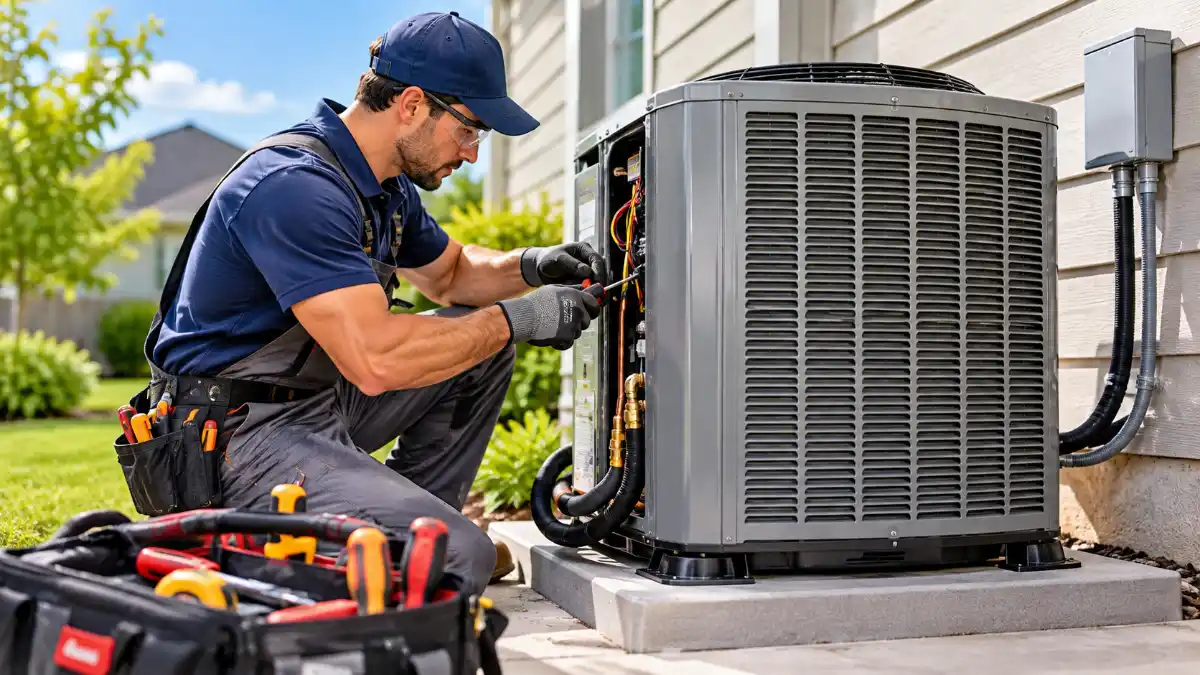
This is not simply swapping out an air conditioner, furnace, or heat pump for a new one – it’s an HVAC installation. Which is why a painstakingly planned air conditioning project will always start with an analysis of the heating and cooling needs of the house, studying existing ductwork & other infrastructure in place, choosing compatible equipment, and then testing system inspections when finalising the job.
So why should the US homeowner care about this? This is because you will receive two bids, which on the surface appear similar but in fact are quoting very different scopes of work for your HVAC. But it might be changes in the ductwork; it might not do anything at all if there were changes to a new thermostat, and if removal of equipment and commissioning, or one method, could tell you what you’re seeing in general, while another one is just showing it through numbers for equipment and labor.
How to be installed, what drives price, whether contractors and how they size systems compares equipment when getting quotes, and some of the red flags seen later.
| Question | Quick answer |
| What does HVAC installation include? | Equipment, required connections, controls, startup, testing, and project-specific work |
| Does every replacement require new ducts? | No |
| Is proper HVAC sizing important? | Yes |
| Is square footage enough for sizing? | No |
| Are permits required? | It depends on local rules and project scope |
| Should homeowners compare quotes? | Usually, especially for major replacements |
| Is brand the most important factor? | No; design and installation quality also matter |
What Does HVAC Installation Include?
The exact scope depends on the system and the house. A simple replacement may reuse suitable ductwork and infrastructure, while a more complex project may require electrical work, duct modifications, drainage changes, new controls, or other improvements.
A complete project may include:
- New heating and cooling equipment
- Removal and disposal of old equipment
- Indoor and outdoor unit installation
- Thermostat or control installation
- Duct connections or modifications
- Refrigerant piping where applicable
- Condensate drainage
- Electrical connections
- Fuel and venting work where applicable
- Startup and system configuration
- Performance and safety checks
- Permits and inspections where required
- Warranty documentation and homeowner instructions
The written proposal should clearly identify what is included and what could cost extra.
- Read more: HVAC Installation
New HVAC Installation vs HVAC Replacement
Installing a system in a new house can involve equipment placement, duct design, electrical planning, controls, drainage, and coordination with other construction work.
Replacement work can be simpler because some infrastructure already exists. However, existing ducts, electrical connections, drains, venting, and equipment locations should still be evaluated before they are reused.
Equipment Replacement vs Complete System Replacement
Not every project requires replacing every component.
In some cases, only part of the system needs replacement. In others, matched components may need to be replaced together for compatibility or performance. Ask the contractor to identify exactly which components will be new and which will remain.
How Much Does HVAC Installation Cost in 2026?
There is no single price that accurately represents every U.S. HVAC project.
A straightforward replacement using suitable existing infrastructure can cost significantly less than a project involving new ducts, electrical upgrades, zoning, difficult access, or major modifications.
Instead of relying only on a national average, homeowners should understand what is driving their specific quote.
What Determines HVAC Installation Cost?
Important factors include:
- System type
- Equipment capacity
- Efficiency rating
- Home size and characteristics
- Local labor rates
- Installation accessibility
- Existing duct condition
- Electrical requirements
- Refrigerant-line changes
- Fuel or venting work
- Thermostat and controls
- Permits and inspections
- Equipment removal
- Optional accessories
| Cost factor | Why it matters | What to ask |
| System type | Equipment and labor requirements differ | What configuration are you proposing? |
| Capacity | Equipment should match the home’s load | How was capacity calculated? |
| Efficiency | Higher-efficiency models can cost more | What rating does this system have? |
| Ductwork | Repairs can add labor and materials | Were the ducts inspected? |
| Electrical work | New equipment may require modifications | Is electrical work included? |
| Permits | Local requirements differ | Who handles the permit? |
- Read more: HVAC Installation
Equipment Price vs Installed Price
An equipment price found online should not be directly compared with a contractor’s complete installed quote.
An installed proposal may include labor, removal, installation materials, duct transitions, refrigerant work, controls, startup, permits, warranty support, and other project-specific services.
Compare complete installed scope against complete installed scope.
Potential Additional Costs
Depending on the property, additional expenses may include duct repairs, electrical upgrades, drainage changes, thermostat replacement, equipment pads, zoning, venting modifications, permits, or removal of old equipment.
Ask how unexpected work and change orders will be handled before signing the contract.
How Is the Right HVAC System Size Determined?
Correct sizing is one of the most important parts of the project.
The Air Conditioning Contractors of America (ACCA) uses Manual J as its residential heating and cooling load-calculation methodology. A proper calculation considers the actual building rather than choosing equipment based only on floor area.
Why Square Footage Alone Is Not Enough
Two houses with the same floor area may need different heating and cooling capacities because of differences in:
- Climate
- Insulation
- Windows
- Air leakage
- Orientation
- Ceiling height
- Construction
- Duct location
- Layout
This is why simple rules such as choosing capacity solely from square footage can be misleading.
What Is an HVAC Load Calculation?
A load calculation estimates the heating and cooling requirements of a particular home under defined design conditions.
Homeowners do not need to perform the calculation themselves. Instead, ask:
“How did you determine the heating and cooling capacity recommended for my home?”
A contractor should be able to explain the sizing approach.
What Happens If the System Is Too Large?
Oversizing can cause unnecessarily short operating cycles and may contribute to comfort or humidity-control problems under some conditions.
It can also mean paying for capacity the home does not need.
- Read more: HVAC Installation
What Happens If the System Is Too Small?
Undersized equipment may struggle to maintain desired indoor conditions during periods near the home’s design load.
Long runtime alone does not prove that equipment is undersized, especially with modern variable-capacity systems. Performance should be evaluated in context.
Choosing the Right HVAC System for Your Home
No single configuration is ideal for every property.
Climate, available fuel, electricity rates, existing ducts, home design, comfort goals, and budget all matter.
Central Air Conditioner and Furnace
This common combination uses an air conditioner for cooling and a furnace for heating, typically distributing conditioned air through a central duct system.
It may be a practical option when suitable ducts already exist, and the available heating fuel fits the homeowner’s needs.
Heat Pump
A heat pump provides both heating and cooling.
Modern heat pumps can operate across a wide range of climates, but equipment selection still needs to consider outdoor conditions, heating load, electrical requirements, energy costs, and any supplemental or backup heating strategy.
- Read more: HVAC Installation
Ductless Mini-Split
Ductless systems are particularly useful for homes without central ducts, additions, converted spaces, individual rooms, or areas requiring separate temperature control.
Because they do not require conventional central ductwork, they can also avoid some distribution losses associated with ducts.
Dual-Fuel System
A dual-fuel system typically combines an electric heat pump with a furnace.
Controls determine when each heating source operates. Proper equipment matching and control configuration are important because the system uses two heating technologies.
Packaged HVAC Systems
Packaged systems combine major components into one cabinet and are used in particular building and installation configurations.
| System | Heating | Cooling | Ducts normally needed? |
| AC + furnace | Yes | Yes | Yes |
| Central heat pump | Yes | Yes | Yes |
| Ductless mini-split | Yes | Yes | No |
| Dual fuel | Yes | Yes | Usually |
| Packaged system | Usually | Usually | Often |
HVAC Efficiency Ratings Explained
Efficiency ratings help compare equipment, but homeowners should understand what each one represents.
SEER2 and EER2
SEER2 describes seasonal cooling efficiency under the current U.S. testing procedure. EER2 provides another measure of cooling efficiency under defined conditions.
When comparing systems, use ratings for the relevant matched equipment configuration.
HSPF2
HSPF2 describes seasonal heating efficiency for heat pumps.
It should be considered alongside the equipment’s heating capacity and performance under local climate conditions.
AFUE
Annual Fuel Utilization Efficiency, or AFUE, is commonly used for furnaces.
A higher percentage indicates that a larger proportion of the fuel’s energy is converted into useful heat under the rating methodology.
- Read more: HVAC Installation
Is Higher Efficiency Always Worth It?
Not automatically.
Consider:
- Additional equipment cost
- Local climate
- Annual usage
- Electricity or fuel rates
- Expected ownership period
- Maintenance requirements
- Available incentives
The useful question is not simply, “Which system has the highest rating?” It is, “What benefit does the efficiency upgrade provide for this home compared with its additional installed cost?”
What Should Happen Before HVAC Installation?
A strong installation begins with assessment and planning.
Complete Home Assessment
The contractor should evaluate relevant building characteristics, existing equipment, ducts, controls, equipment locations, electrical requirements, drainage, and fuel or venting systems where applicable.
Heating and Cooling Load Evaluation
Capacity should reflect the home’s heating and cooling requirements rather than floor area alone.
Ask how the proposed size was determined and whether a home-specific load calculation was used.
Ductwork Inspection
Potential duct problems include:
- Leakage
- Damaged sections
- Restrictions
- Inadequate returns
- Poor insulation
- Improper sizing
- Uneven distribution
Installing premium equipment will not automatically fix a poorly functioning duct network.
Electrical and Fuel Requirements
Different HVAC systems have different electrical, fuel, venting, and control requirements.
These are professional tasks. Refrigerant-related work may also fall under federal technician-certification requirements.
- Read more: HVAC Installation
Permit and Inspection Requirements
Permit requirements vary by state and local jurisdiction.
Ask:
“Does my project require a permit, who obtains it, and is a final inspection required?”
When uncertain, verify requirements with the local building department.
HVAC Installation Process: Step by Step
Although equipment differs, most residential projects follow a recognizable sequence.
Step 1: Prepare the Work Area
The crew creates safe access and protects nearby floors and surfaces. Homeowners can help by clearing paths and keeping children and pets away from work zones.
Step 2: Remove Existing Equipment
During replacement projects, old equipment is safely disconnected and removed. Refrigerants must be handled according to applicable requirements.
Step 3: Prepare Equipment Locations
Pads, platforms, clearances, drains, and connections are checked and modified if necessary.
Step 4: Install the Indoor Equipment
The indoor component is positioned and connected to the appropriate ducts, drains, controls, electrical supply, fuel, or venting components depending on the system.
Step 5: Install the Outdoor Equipment
The outdoor unit is placed on appropriate support with the clearances required by the manufacturer.
Step 6: Complete Required Connections
Depending on equipment type, technicians may complete:
- Duct connections
- Refrigerant piping
- Electrical connections
- Condensate drainage
- Fuel connections
- Venting
- Control wiring
- Read more: HVAC Installation
Step 7: Install Thermostat and Controls
Controls must be compatible with the equipment, particularly for staged, variable-capacity, communicating, or zoned systems.
Step 8: Start and Commission the System
A professional installation should not end when the system first turns on.
Commissioning checks whether the equipment has been configured and is operating as intended.
Step 9: Test System Operation
The installer should verify relevant items such as airflow, heating and cooling operation, drainage, controls, equipment response, and applicable safety functions.
Step 10: Complete the Homeowner Handoff
Before leaving, the installer should explain thermostat operation, filter requirements, basic maintenance, warranty information, and any remaining inspection steps.
How Long Does HVAC Installation Take?
Project duration depends on the actual scope.
Straightforward HVAC Replacement
Replacing accessible equipment while reusing suitable existing infrastructure is generally less complex than redesigning ducts or making major electrical changes.
Installation Requiring Additional Modifications
Projects can take longer when they involve new ductwork, electrical upgrades, zoning, structural changes, difficult access, or work by multiple trades.
Factors That Can Delay Installation
Possible delays include:
- Permit processing
- Inspection scheduling
- Equipment availability
- Unexpected duct problems
- Electrical modifications
- Difficult equipment access
- Weather
- Previously hidden conditions
Ask the contractor for a project-specific timeline.
Do You Need New Ductwork?
Not every new system requires new ducts.
When Existing Ducts May Be Reused
Existing ducts may remain when they are in serviceable condition, reasonably airtight, appropriately designed, and compatible with the new system’s airflow requirements.
Signs Ductwork Needs Attention
Look for professional evaluation if there are damaged ducts, noticeable leakage, very weak airflow, persistent comfort differences, excessive duct noise, or inadequate return-air pathways.
Repair, Seal, or Replace?
Minor defects may need targeted repair or sealing. Major condition or design problems can require modification or replacement.
The correct choice depends on diagnosis—not on automatically replacing everything.
- Read more: HVAC Installation
HVAC Add-Ons Worth Considering During Installation
Additional equipment should address an identified need rather than simply increase the project price.
Smart Thermostat
Smart thermostats can provide scheduling, remote access, and energy-management features. Compatibility should be confirmed before purchase.
HVAC Zoning
Zoning allows separate temperature control for different areas. It requires proper duct and control design rather than simply adding dampers.
Improved Filtration
Higher-efficiency filters can capture more particles, but the system must be able to handle the filter’s airflow resistance.
Whole-Home Humidity Control
Humidification or dehumidification can be useful when the home has a genuine humidity problem.
Fresh-Air Ventilation
ERVs and HRVs provide controlled outdoor-air ventilation. The appropriate option depends on climate, building characteristics, and ventilation needs.
How to Choose an HVAC Installation Contractor
Equipment quality cannot compensate for poor system design or installation.
Verify Licensing and Insurance
Check applicable state and local contractor requirements and verify credentials through the appropriate authority where possible.
Ask How the System Will Be Sized
The contractor should explain how the proposed capacity was selected.
Ask About Ductwork
Confirm whether existing supply and return ducts were evaluated and whether modifications are included.
Request Exact Equipment Model Numbers
Exact model numbers make it possible to compare capacity, efficiency, features, and equipment combinations.
Get an Itemized Written Estimate
The proposal should clearly identify equipment, labor, controls, ductwork, electrical work, permits, disposal, warranties, and total project price.
Ask About Permits and Inspection
Clarify whether permits are necessary and who is responsible for obtaining them.
Understand Warranties
Separate the manufacturer equipment warranty from the contractor’s labor warranty.
Ask about duration, exclusions, documentation, and registration requirements.
Ask How the System Will Be Commissioned
A valuable question is:
“What measurements and tests will you perform before considering the job complete?”
How to Compare HVAC Installation Quotes
Do not compare only the final dollar amount.
Compare Scope Before Price
For example, a $10,000 quote is not automatically better than an $11,500 quote if the second includes necessary duct modifications, better-defined commissioning, permits, or different warranty coverage.
Use an apples-to-apples comparison.
HVAC Quote Comparison Worksheet
| Item | Contractor A | Contractor B | Contractor C |
| Exact model numbers | |||
| Capacity | |||
| Efficiency ratings | |||
| Sizing method | |||
| Ductwork | |||
| Thermostat | |||
| Electrical work | |||
| Permits | |||
| Removal/disposal | |||
| Labor warranty | |||
| Commissioning | |||
| Total price |
HVAC Installation Day Checklist for Homeowners
Before the Crew Arrives
- Clear access to equipment.
- Move fragile belongings.
- Secure pets.
- Confirm equipment locations.
- Review the agreed scope.
- Ask about expected utility interruptions.
During Installation
Stay available for questions about placement, unexpected conditions, or proposed scope changes. You do not need to supervise technical procedures.
Before the Contractor Leaves
Confirm that:
- The system operates
- The thermostat works
- You know the filter location and specification
- You received warranty information
- Basic maintenance was explained
- Permit/inspection status is understood
- You have contact information for follow-up
How to Tell If Your HVAC Was Installed Correctly
Homeowners cannot verify every technical measurement, but several observations are useful.
System Starts and Operates Normally
The equipment should respond correctly to thermostat commands without persistent errors or abnormal shutdowns.
Airflow Is Reasonably Consistent
Every register does not need identical airflow, but extreme unexplained differences deserve attention.
Thermostat and Controls Work
Test temperature adjustments, modes, fan control, scheduling, and zones where applicable.
Condensate Drainage Works Properly
Unexplained water around equipment should be investigated rather than treated as normal.
No Persistent Unusual Noises or Leaks
Grinding, strong vibration, leaking, or other persistent unusual symptoms should be reported to the installer.
Contractor Completes Commissioning
Ask which startup and commissioning checks were completed. A new system simply turning on is not the same as verifying that it operates as designed.
HVAC Installation Red Flags
No single warning sign automatically proves poor workmanship, but these situations deserve additional questions.
| Red flag | Better sign |
| Sizing based only on square footage | Home-specific assessment |
| Ductwork never discussed | Air distribution evaluated |
| Only a brand appears on quote | Exact models documented |
| Vague total price | Clearly defined scope |
| Permit questions avoided | Responsibility explained |
| Warranty unclear | Labor and manufacturer terms separated |
| No commissioning discussion | Testing process explained |
| Pressure to sign immediately | Written proposal available for review |
Common HVAC Installation Mistakes to Avoid
Choosing Only by Lowest Price
A low price can be legitimate, but compare equipment and project scope before deciding.
Assuming Bigger Equipment Is Better
Extra capacity is not automatically an upgrade. Proper sizing matters more.
Ignoring Existing Ductwork
Poor air distribution can limit comfort even with expensive new equipment.
Automatically Buying Maximum Efficiency
Compare the additional upfront price with realistic energy savings and your expected ownership period.
Comparing Quotes Without Model Numbers
Without exact models, comparing equipment features and ratings becomes difficult.
Ignoring Permit Requirements
Verify local requirements instead of assuming permits are unnecessary.
Forgetting Warranty Requirements
Keep warranty documents and follow applicable registration and maintenance requirements.
Unique Information Gaps Competitors Missed
Brand comparisons and equipment ratings do not tell homeowners whether the complete installation is well planned.
The HVAC Installation Quality Framework
Before signing a proposal, answer five questions:
1. Was the home properly evaluated?
2. Was equipment capacity selected using a reasonable sizing method?
3. Was existing ductwork considered?
4. Does the written quote clearly define the scope?
5. Will the completed system be commissioned and documented?
If one of these areas is unclear, ask for clarification before installation.
The Cheapest Equipment Isn’t Necessarily the Cheapest System
Long-term ownership involves more than the initial equipment price.
Energy use, repairs, maintenance, warranties, system design, and installation quality can all affect overall cost.
That does not mean expensive automatically means better. Compare the complete value of the proposal.
Equipment Brand vs Installation Quality
Well-known brands such as Carrier, Trane, Lennox, Goodman, and Rheem offer different product families, but brand alone does not determine whether a system will perform well in a particular house.
Correct sizing, compatible components, appropriate airflow, sound installation, and commissioning remain important regardless of logo.
2026 Incentive Warning
Homeowners should be careful when reading older articles about federal HVAC tax credits.
The federal Energy Efficient Home Improvement Credit ended for qualifying property placed in service after December 31, 2025. However, state, local, utility, and manufacturer programs can have separate eligibility rules.
Always verify current incentives before including them in a purchase calculation.
Questions to Ask Before Signing an HVAC Installation Contract
Use this final checklist:
- How did you determine the required capacity?
- Did you inspect the existing ducts?
- What exact model numbers are included?
- What are their efficiency ratings?
- What labor and materials are included?
- What could create additional charges?
- Who handles permits?
- What manufacturer and labor warranties apply?
- How will the system be commissioned?
- What documentation will I receive?
- What maintenance is required?
- Who should I contact if there is a problem?
Conclusion: Make the Installation Decision Based on the Whole System
A successful HVAC installation starts with the home rather than the equipment catalog.
The strongest process is:
Home assessment → proper sizing → system selection → duct evaluation → detailed quote → contractor verification → permits → professional installation → commissioning → homeowner handoff.
Before signing, compare proposals side by side. Look beyond the total price to equipment models, sizing methods, ductwork, controls, permits, warranties, and commissioning.
The goal is not simply to buy a new furnace, air conditioner, or heat pump. It is to end up with a complete heating and cooling system that is appropriate for the house and properly installed.
Frequently Asked Questions
WHAT IS THE PRICE FOR HVAC INSTALLATION IN 2026?
Same problem – expense is determined by the type of equipment, your ability/capacity/efficiency/labor market for your install patent/patent-free niche/system locus/install labor affinity committed to site. You are looking for written estimates from in-the-trenches home in on-market homes, not some national-average one-size-fits-all blanket.
How long does it take to install HVAC?
Different equipment for any given project would take hours, but if ductwork, electrical work, zoning changes,s or any structural modifications are involved that may require a multitude of inspections, it could span weeks/months. Have the contractor produce a schedule based on actual project data.
What is included in an HVAC install
Depending on the area, you could end up doing equipment labor, controls, duct connections, refrigerant piping,g electrical work, drainage, fuel or venting connections, removal,l permit startup, commissioning, and handoff to the customer.
How Can I Tell What Size HVAC Unit My House Needs?
The appliance heating and cooling capacity should be matched with the house load. In addition to square feet, we need to also consider Climate, Insulation, Windows, Air leakage, orientation/layout, and many other building characteristics.
Do You Need New Ductwork When Replacing HVAC
Not always. If the ductwork is clean, designed properly,y and demonstrates sufficient airflow for the proposed equipment, it remains.
For the following sections, we will cover each of the things performed by heat pumps in more detail and how they are compared to heating and air conditioners.
Neither is universally better. The decision involves many variables such as climate, utility rates, fuel supply, and availability of existing local infrastructure alongside electric loads where the new equipment will be deployed,d along with achievable performance for those applications and installation expenses.
Need an HVAC installation permit.it
Permitting requirements can vary greatly in local jurisdictions and project-specific capacities. When In Doubt, Ask The Contractor And Get Ahold Of The Local Building Department
New HVAC Unit: Replace the Thermostat
Not necessarily. The current stat fits for an MX-variable-capacity communicating heat pump or zoned equipment is still valid, but may require specialty controls.
However, it is important to see if you got a good installation of your new HVAC.
Controls, comfort levels, and draining functions: the system should work with no unknown spots leaking or rattling. The installer completed the related startup and commissioning inspections and furnished documentation, as necessary.