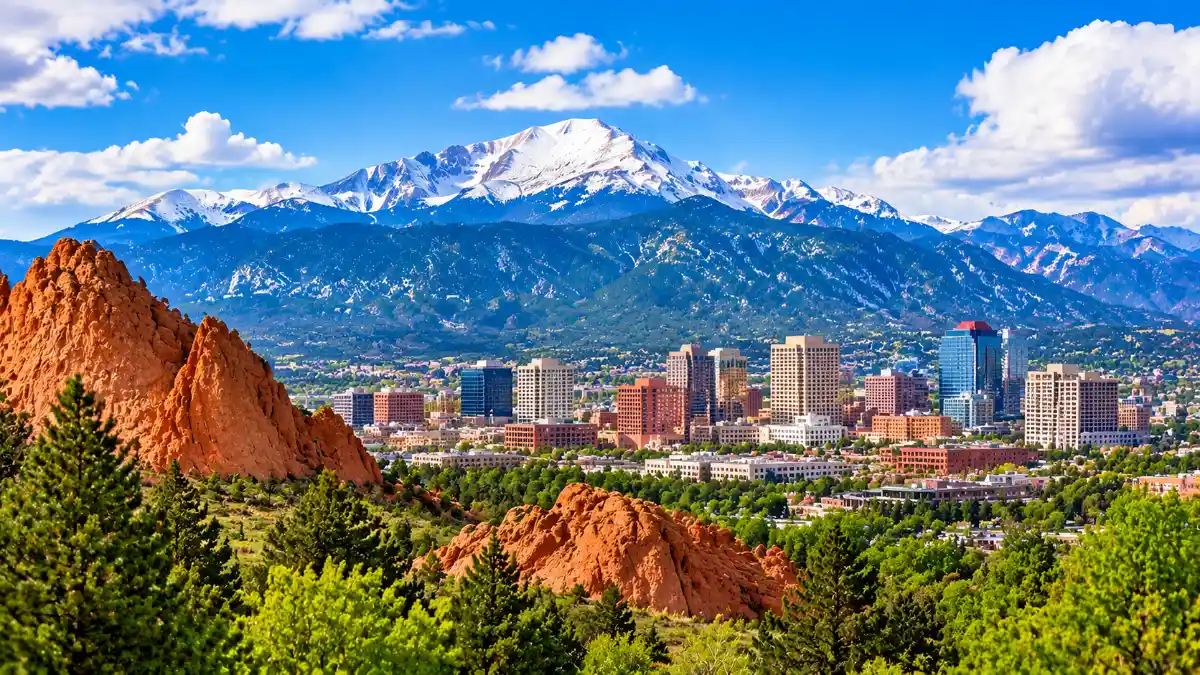
Colorado Springs weather varies throughout the year, with warm summers, cold winters, cooler evenings, and occasional sudden changes. June through August offer the warmest conditions, while May, September, and early October are often comfortable choices for sightseeing and outdoor activities.
Located beside the Rocky Mountains, Colorado Springs sits more than 6,000 feet above sea level. That elevation contributes to noticeable daytime and nighttime temperature differences. Whether you’re planning a summer vacation, an autumn hiking trip, or a winter getaway, understanding the city’s monthly climate helps you choose suitable travel dates.
What Is the Climate Like in Colorado Springs?
Colorado Springs has a semi-arid climate, meaning the area receives relatively little precipitation compared with many other U.S. destinations.
The city experiences four distinct seasons. Summers are warm, winters bring freezing temperatures and periodic snow, and spring can be particularly unpredictable.
According to NOAA’s 1991–2020 climate normals, the Colorado Springs Municipal Airport station records approximately 15.91 inches of annual precipitation and 32.5 inches of annual snowfall. These figures describe historical averages, not guaranteed yearly totals.
The city’s proximity to the mountains also matters. Conditions downtown may be considerably different from those at higher elevations, particularly around Pikes Peak.
Colorado Springs Weather by Month: Average Temperatures
The following table uses the National Weather Service’s published 1991–2020 climate normals for Colorado Springs.
| Month | Average High | Average Low |
| January | 45.0°F | 18.5°F |
| February | 46.5°F | 20.2°F |
| March | 54.9°F | 27.3°F |
| April | 61.0°F | 34.0°F |
| May | 70.7°F | 43.5°F |
| June | 81.6°F | 52.8°F |
| July | 86.5°F | 58.2°F |
| August | 83.6°F | 56.6°F |
| September | 77.1°F | 48.9°F |
| October | 64.7°F | 36.6°F |
| November | 52.9°F | 26.0°F |
| December | 44.6°F | 18.7°F |
Source: National Weather Service, Colorado Springs 1991–2020 climate normals.
July is typically the warmest month, while January has the lowest average nighttime temperature. The difference between daily highs and lows explains why bringing layers is useful even during summer.
Winter Weather in Colorado Springs: December to February
Winter brings freezing nights, cool afternoons, occasional snowstorms, and periods of sunshine.
December: Cold Nights and Winter Conditions
December temperatures average 44.6°F during the day and 18.7°F overnight.
Visitors should pack insulated outerwear, gloves, and footwear suitable for potentially icy conditions. Snow is possible, although the landscape is not continuously snow-covered.
January: One of the Coldest Months
January has an average high of 45°F and a low of 18.5°F.
Sunny afternoons can feel relatively comfortable, but freezing temperatures return frequently at night. Winter driving conditions should be checked before mountain excursions.
February: Winter Continues
February becomes slightly warmer on average, with daytime highs around 46.5°F.
However, snowstorms and freezing nights remain possible. Travelers should prepare for winter conditions rather than assuming spring has already arrived.
Spring Weather in Colorado Springs: March to May
Spring can bring some of the year’s most unpredictable weather. Mild afternoons may be followed by colder systems, gusty winds, rain, or snowfall.
March: A Gradual Transition
March averages 54.9°F during the day, while nighttime temperatures remain below freezing.
Snow is still possible, so flexible travel plans are sensible.
April: Warmer but Changeable
April’s average high reaches 61°F.
This can be a pleasant month for walking and sightseeing, but visitors should prepare for wind and occasional cold-weather interruptions.
May: Increasingly Comfortable
May brings average highs near 71°F.
Conditions become more appealing for parks, sightseeing, and lower-elevation trails. Nevertheless, spring storms remain possible, making a waterproof jacket useful.
Summer Weather in Colorado Springs: June to August
Summer is the warmest period and a popular season for outdoor recreation.
June: Warm Days and Cool Evenings
June averages approximately 82°F during the day and 53°F overnight.
The temperature difference makes lightweight layers valuable, particularly during early-morning outings.
July: The Hottest Month
July has an average high of 86.5°F.
It is also the wettest month according to NOAA precipitation normals, averaging 3.12 inches of precipitation. Thunderstorms may interrupt afternoon activities.
August: Warm with Thunderstorm Potential
August averages 83.6°F during the day.
Afternoon thunderstorms remain a consideration, especially for hiking. Visit Colorado Springs recommends beginning major outdoor activities early to reduce exposure to developing storms.
Fall Weather in Colorado Springs: September to November
Autumn brings cooler temperatures gradually and can provide comfortable conditions for sightseeing.
September: Pleasant Outdoor Temperatures
September averages 77.1°F during the day and 48.9°F overnight.
These conditions often suit walking, scenic drives, and lower-elevation hiking.
October: Cooler Days and Chilly Evenings
October’s average high drops to 64.7°F.
Morning and evening temperatures become noticeably colder, making jackets increasingly useful.
November: Winter Approaches
November has an average high of 52.9°F and a low near 26°F.
Snow and freezing conditions become more likely, particularly during stronger weather systems.
When Does It Snow in Colorado Springs?
Snow can occur from autumn through spring, although individual storms and yearly totals vary considerably.
Interestingly, NOAA’s historical averages show March receives approximately 5.7 inches of snowfall, compared with 4.9 inches in January.
That doesn’t mean March is always snowier. It simply shows that late-season snowfall is an important part of the local climate.
For accurate travel decisions, check current forecasts rather than relying only on monthly snowfall averages.
What Is the Best Time to Visit Colorado Springs?
The ideal travel season depends on your planned activities.
| Travel Preference | Recommended Months |
| Comfortable sightseeing | May, June, September |
| Warm-weather recreation | June–August |
| Autumn scenery | September–October |
| Cooler outdoor activities | April–May, September |
| Winter scenery | December–February |
| Spring travel | March–May |
May and September provide a particularly appealing balance of daytime warmth and cooler evenings.
Summer offers the warmest temperatures, but visitors should allow for afternoon thunderstorms. Winter appeals to travelers who enjoy colder weather and seasonal mountain scenery.
What Should You Pack for Colorado Springs?
Packing in layers works better than relying exclusively on average daytime temperatures.
Spring: Bring sweaters, long pants, comfortable footwear, and a waterproof outer layer.
Summer: Pack breathable clothing, sunscreen, sunglasses, water, and a lightweight jacket for cooler evenings.
Fall: Choose warmer layers, comfortable walking shoes, and a jacket suitable for chilly mornings.
Winter: Bring an insulated coat, gloves, a warm hat, and footwear appropriate for snow or ice.
Higher-elevation outings may require additional protective clothing regardless of the season.
Why Pikes Peak Weather Is Different
Pikes Peak reaches approximately 14,115 feet, far above the city.
Because temperatures generally decrease with elevation, the summit can be substantially colder and windier than downtown Colorado Springs.
Mountain visitors should check destination-specific forecasts and current road or attraction conditions before traveling.
Conclusion
Colorado Springs weather offers distinct seasonal experiences, from warm summer afternoons to cold winter nights. May, June, and September are strong choices for comfortable sightseeing, while summer suits warm-weather recreation and winter offers colder seasonal scenery.
Choose travel dates using historical climate averages, then check updated forecasts as your trip approaches.
Read more: Colorado Springs Weather
Frequently Asked Questions
What is the best month to visit Colorado Springs?
May, June, and September are often comfortable for sightseeing, although the best choice depends on your activities.
What is the hottest month in Colorado Springs?
July is typically the hottest month, with an average high of 86.5°F.
What is the coldest month in Colorado Springs?
January has the lowest average nighttime temperature, approximately 18.5°F.
Does Colorado Springs receive snow every winter?
Snow is a normal feature of the winter climate, although accumulation varies from year to year.
Can it snow in Colorado Springs during May?
Yes. May snowfall is possible, especially during strong spring weather systems.
Is Colorado Springs humid during summer?
The city generally has relatively low humidity compared with many eastern U.S. destinations.
Is September a good time for hiking?
September often provides comfortable temperatures for hiking, particularly at lower elevations.
Does Colorado Springs experience summer thunderstorms?
Yes. Afternoon thunderstorms are common enough to be an important consideration for mountain activities.
What should tourists wear in Colorado Springs?
Layers are recommended throughout the year because temperatures can change significantly between day and night.
Is Pikes Peak colder than Colorado Springs?
Yes. Its higher elevation generally results in colder temperatures, stronger winds, and different weather conditions.