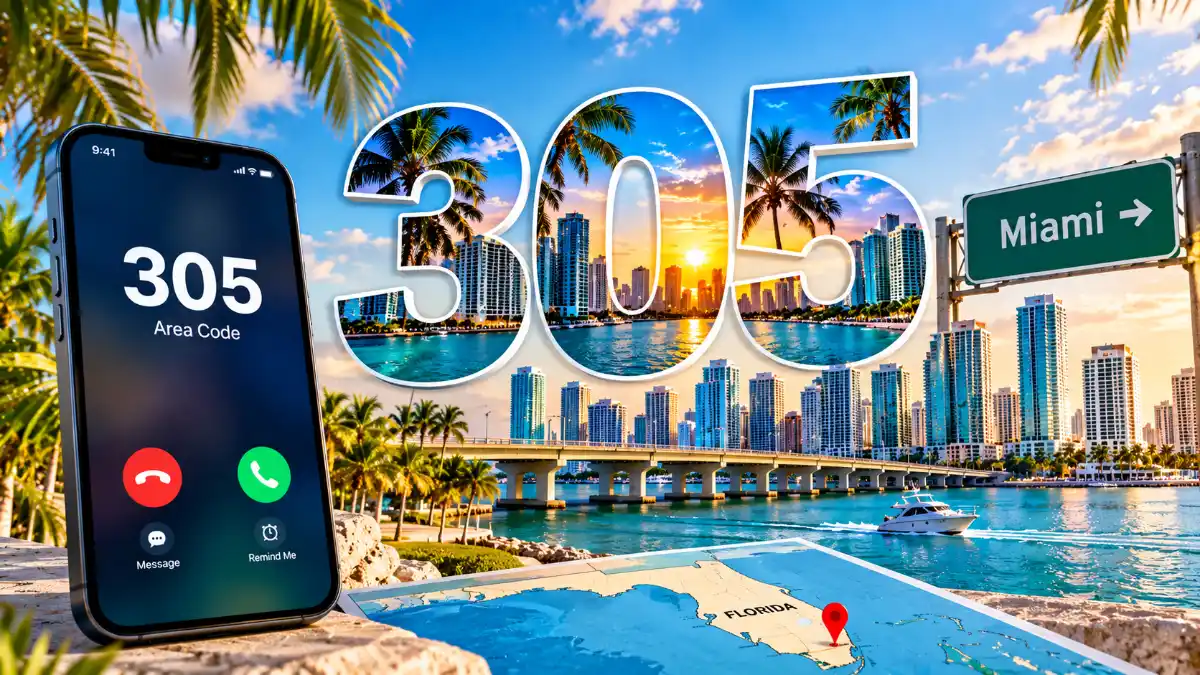
An unexpected call displaying the 305 area code is not automatically a scam. This is a legitimate South Florida code associated with Miami-Dade County and the Florida Keys. The call could come from a resident or business, but criminals can also falsify caller ID so a call seems to come from Miami. If you don’t recognize the number, let it go to voicemail and verify any important claim through a contact method you find yourself.
Why Would a 305 Number Call Me?
There’s no way to tell from the prefix alone. The caller might be a Miami-area hotel confirming a booking, a medical office, a company handling an order, or someone who kept their Florida number after moving. Businesses can also route calls through internet-based phone systems, meaning the person speaking may be nowhere near Miami.
Unwanted calls have several possible sources too: telemarketers, automated systems, mistaken numbers, and scammers. Instead of guessing from the location, look for a clear purpose and whether the caller will let you verify it independently.
Is the 305 Area Code Linked to Scams?
The code itself is legitimate. The Florida Public Service Commission identifies its service territory as Miami-Dade County and the Florida Keys; it operates alongside 786 and 645.
The risk comes from caller ID spoofing, which lets a caller display a different name or number. The Federal Trade Commission’s phone-scam guidance explains that even a familiar-looking local number can be faked.
That is why public complaints about a particular number can be informative but not conclusive.
Which Call Behaviors Are Warning Signs?
Pay particular attention when a stranger uses urgency to prevent you from checking their story. Common red flags include:
- Threatening arrest, fines, or immediate account suspension unless you pay.
- Asking for a password, PIN, Social Security number, or one-time login code.
- Demanding gift cards, cryptocurrency, wire transfers, or payment-app transfers.
- Claiming you’ve won a prize but must first pay taxes or a processing fee.
- Insisting you stay on the line or keep the conversation secret.
- Sending a link and pressuring you to enter personal or payment details.
A real bank may alert customers about suspicious activity, so the topic of a warning isn’t the issue. The problem is an unexpected caller demanding information or action before you can establish who they are.
How to Check an Unknown 305 Number
1. Review the voicemail without acting immediately
Legitimate callers often explain why they contacted you. Note the claimed organization and request. A convincing voicemail is still only a claim, not authentication; recorded messages can also be fraudulent.
2. Search the entire ten-digit number
Search results might show an official business listing, or complaints from other recipients. Third-party lookup sites can contain outdated or incorrect records, especially when numbers have been reassigned or spoofed.
3. Contact the organization independently
If the message mentions a bank, insurer, school, delivery firm, or government agency, find the organization’s number through its official website, app, statement, or the back of your payment card. Don’t rely on a callback number provided during the suspicious call.
4. Decide whether any response is needed
If the caller gives no clear purpose, won’t permit verification, or asks for sensitive details, you don’t need to continue. Hang up. Block the displayed number if calls persist, while remembering that blocking cannot stop every spoofed caller.
What If the Caller Claims to Be Your Bank?
A scammer may know your name or some account details. That information alone isn’t proof of employment at your bank. Never give an unexpected caller your password or a security code sent to your phone.
End the call, open your bank’s official app, and check for notices. If needed, telephone the number printed on your card. If you have already shared sensitive information, contact the bank promptly to secure the account and ask about unauthorized activity.
What If They Claim to Represent the Government?
Someone may claim to work for the IRS, Social Security Administration, police, or a court. Spoofed caller ID can make that claim look convincing.
Don’t send money or personal documents to resolve an unverified telephone demand. Use the relevant agency’s official government website to find its contact information, then ask whether the supposed issue exists.
Should You Call an Unknown 305 Number Back?
You can, but there is usually no reason to do so immediately when the call has no recognizable purpose. First review voicemail and any context: have you recently contacted a Miami hotel, applied for a job, or arranged a delivery?
If a company supposedly called, prefer its published contact number. A displayed 305 number could be spoofed, and returning the call may reach an unrelated person.
Blocking and Reporting Suspicious Calls
Your phone’s recent-call screen generally offers a way to block a number. Carriers may provide additional spam filtering and call labeling. The FTC’s call-blocking guide explains the limitations of filtering, including spoofed numbers.
For suspected fraud or money lost, report the incident through FTC ReportFraud. If you simply want to report an unwanted call and lost no money, use DoNotCall.gov. You can also submit unwanted-call complaints to the FCC.
Include your number, the displayed caller ID, any callback number, and the date and time.
If You Already Answered or Shared Information
Simply answering an ordinary voice call doesn’t automatically disclose passwords or grant access to your accounts. The main risks arise when you share confidential details, approve a verification request, open a malicious link, or send money.
If you gave away a login code or password, change the relevant password through the official app or website and contact the account provider. If you paid, notify your bank or payment service immediately and ask whether the transaction can be reversed.
Conclusion
Treat a 305 caller ID as a geographic clue, not an identity check. A legitimate Miami number can appear on an ordinary business call or a spoofed scam call. Let unknown calls go to voicemail, verify urgent claims independently, and report threatening or deceptive contact rather than responding under pressure.
- Read more: 305 Area Code
Frequently Asked Questions
Is every call from a 305 number suspicious?
No. Many genuine South Florida residents and organizations use 305. Evaluate the request and verify unfamiliar callers.
Where is area code 305 from?
It belongs to Miami-Dade County and the Florida Keys, sharing the area with 786 and 645.
Can a scammer display a real 305 number?
Yes. Caller ID spoofing can show a genuine subscriber’s number even when that subscriber did not place the call.
How can I learn who called me from 305?
Check voicemail, search the full number, and contact any claimed organization using its independently verified phone number.
Will answering a scam call hack my phone?
Simply answering a conventional voice call does not ordinarily give someone control of your device. Avoid links, downloads, and sharing codes.
Should I reply to a suspicious voicemail?
Don’t use an unverified callback number. Contact the named organization through its official channel instead.
What if I told a caller my banking details?
Call your bank immediately using its official number, describe what you shared, and follow its account-security advice.
Can blocking one 305 number stop all spam calls?
No. It blocks that number on your device, but unwanted callers can change or spoof their displayed numbers.
Where should I report an unwanted 305 call?
Use ReportFraud.ftc.gov for suspected fraud or losses, and DoNotCall.gov to report unwanted calls without a loss.