
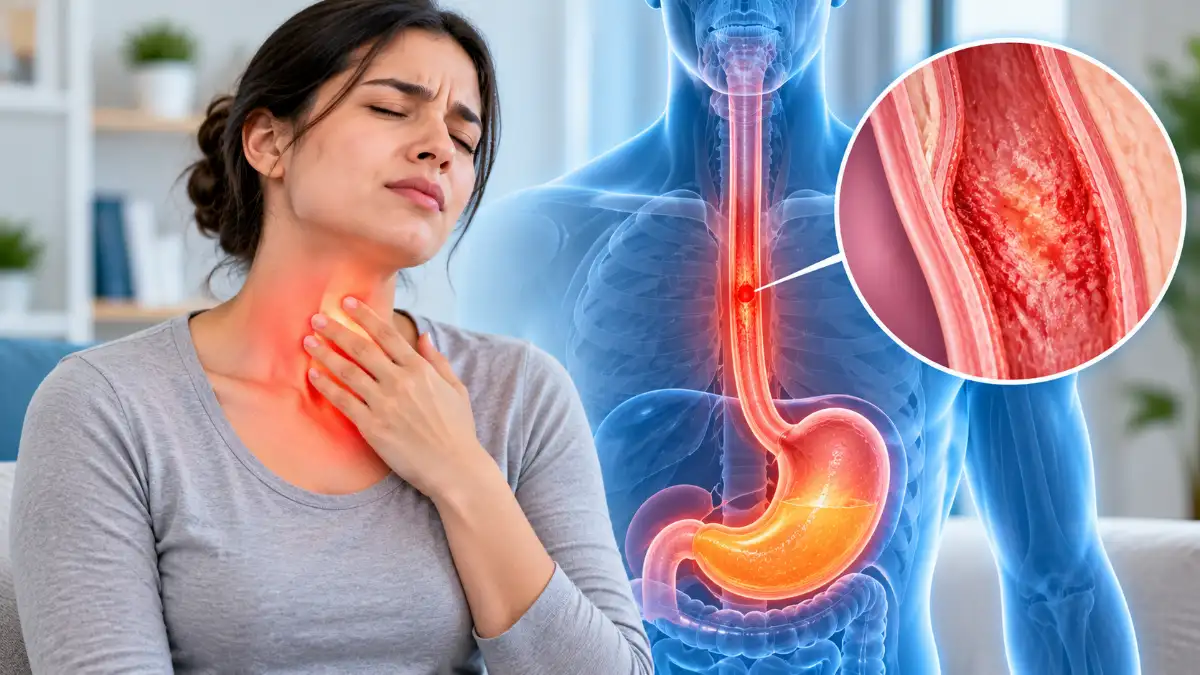
Esophagitis is inflammation of the lining of the esophagus, the tube that carries food from your mouth to your stomach. It can cause heartburn, pain when swallowing, chest discomfort, or the sensation that food is stuck. Acid reflux is a common cause, but certain medicines, infections, and an immune-related condition called eosinophilic esophagitis can also be responsible. Treatment depends on what caused the irritation. Some cases heal after a short course of treatment, while others need ongoing care. Persistent swallowing difficulty deserves medical attention.
What Is Esophagitis?
The esophageal lining can become inflamed when exposed to stomach contents, a lodged pill, infection, or an immune response. Prolonged injury can cause ulcers or scarring.
Esophagitis describes the inflammation, not one specific disease. Acid reducers cannot treat every cause. The MedlinePlus overview of esophagitis outlines the major causes and complications.
What Are the Symptoms of Esophagitis?
Symptoms vary. Some notice burning; others develop swallowing problems.
- Difficulty swallowing (dysphagia): Food travels slowly or feels lodged in the chest.
- Painful swallowing (odynophagia): Food, liquids, or even saliva may hurt going down.
- Heartburn: Burning discomfort behind the breastbone.
- Regurgitation: Stomach contents or swallowed food come back up.
- Food impaction: Food becomes stuck rather than passing into the stomach.
Cough, hoarseness, and sore throat can accompany reflux-related symptoms. In children, feeding refusal, vomiting, and poor weight gain may be clues. Chest pain can also signal a heart problem; never assume new or severe chest pain is digestive.
What Causes Esophagitis?
Reflux Esophagitis
Reflux esophagitis develops when stomach contents repeatedly move backward into the esophagus, irritating the lining. Gastroesophageal reflux disease (GERD) can cause this injury. Obesity, pregnancy, smoking, and hiatal hernia can contribute, though reflux does not always cause inflammation.
Eosinophilic Esophagitis
EoE is a chronic immune-mediated condition in which eosinophils, a type of white blood cell, accumulate in the esophagus. It can cause swallowing difficulties and repeated food impactions. Some people adapt by taking unusually small bites, chewing excessively, or drinking water with every mouthful.
The American College of Gastroenterology’s EoE guidance emphasizes symptoms, esophageal biopsies, and evaluation for alternative explanations. EoE is not diagnosed from food allergy tests alone.
Medication-Induced Esophagitis
Certain tablets can irritate the esophagus if they remain there too long. Examples include some antibiotics, potassium tablets, and osteoporosis medicines such as alendronate. Taking a pill with too little water or lying down soon afterward increases the risk. Follow the instructions for each medicine; ask the prescriber before changing or stopping it.
Infectious Esophagitis
Candida yeast and viruses such as herpes simplex or cytomegalovirus can cause esophageal infections, especially in people with weakened immune systems. Painful swallowing may be prominent. These infections require treatment directed at the organism rather than routine acid-reducing medicine alone.
How Is Esophagitis Diagnosed?
A clinician asks about symptoms, medications, reflux history, immune conditions, and whether food gets stuck. Depending on the suspected cause, tests may include:
- Upper endoscopy: A small camera examines the esophagus and identifies visible injury or narrowing.
- Biopsy: Tissue samples can help diagnose EoE or an infection, even when the lining looks relatively normal.
- Esophageal pH monitoring: Measures acid exposure when reflux needs further assessment.
- Barium swallow: An imaging test that can reveal narrowing and some swallowing problems.
Not everyone needs all four tests. For EoE, biopsy findings are essential, and a specialist may recommend repeat testing to assess treatment response.
How Is Esophagitis Treated?
Treatment must address the cause rather than merely suppress the discomfort.
Reflux-related inflammation: Proton pump inhibitors (PPIs), such as omeprazole, reduce stomach acid and help the lining heal. H2 blockers may be useful in some cases, although PPIs generally heal erosive reflux injury more effectively. The NIDDK guide to GERD treatment discusses medications and lifestyle changes.
Eosinophilic inflammation: Options include PPIs, swallowed topical steroids, and structured elimination diets. Dupilumab may be appropriate for selected patients. If narrowing causes difficulty swallowing, endoscopic dilation can widen the passage, but anti-inflammatory treatment is still needed.
Pill-related injury: A clinician may change the offending medication or its administration instructions. Do not discontinue prescribed treatment without medical advice.
Infectious inflammation: Antifungal or antiviral treatment is selected according to the infection.
What Can You Eat With Esophagitis?
No single diet works for everyone. Softer foods may be easier to swallow, but dietary adjustments cannot replace evaluation.
For reflux-related symptoms, try finishing meals at least two to three hours before bed, avoiding foods that consistently trigger symptoms, and elevating the upper body if reflux occurs at night. Weight management can help some people with GERD.
EoE elimination diets are different: they are a treatment strategy that should be planned with a specialist and, ideally, a dietitian. Removing numerous foods without guidance can make adequate nutrition difficult. Standard allergy testing does not reliably identify EoE food triggers.
How Long Does Esophagitis Take to Heal?
There is no single recovery timeline. Mild pill-related irritation may improve once further injury is prevented, whereas reflux-related inflammation often needs several weeks of treatment. More extensive damage can take longer. EoE is chronic and commonly requires maintenance treatment.
Feeling better is encouraging, but it does not always mean inflammation has resolved. In EoE, clinicians may use follow-up endoscopy and biopsies because symptoms do not reliably reflect tissue healing.
Can Esophagitis Cause Complications?
Ongoing inflammation can result in ulcers, bleeding, narrowing of the esophagus (a stricture), or food impaction. Persistent swallowing difficulty can also contribute to dehydration or unintended weight loss.
Long-standing GERD can lead to Barrett’s esophagus, which raises esophageal cancer risk. Most affected people never develop cancer.
When Should You Seek Medical Help?
Arrange a medical appointment for swallowing pain, food repeatedly sticking, unexplained weight loss, or reflux that persists despite appropriate treatment.
Seek emergency care for severe or prolonged chest pain, breathing difficulty, vomiting blood, or food stuck so completely that you cannot swallow saliva. Those symptoms are not suitable for home treatment.
Conclusion
Esophagitis can feel like ordinary heartburn, but painful swallowing or food sticking can point to a problem needing investigation. The key is finding the cause: reflux, EoE, a medication, and an infection call for different care. If symptoms continue or swallowing changes, speak with a healthcare professional rather than relying on repeated self-treatment.
- Read more: Esophagitis
Frequently Asked Questions
Is esophagitis the same as acid reflux?
No. Reflux is the backward movement of stomach contents. Esophagitis is inflammation of the esophageal lining; reflux is only one possible cause.
Can esophagitis go away on its own?
Mild irritation sometimes improves once its trigger disappears. Persistent symptoms, especially difficulty swallowing, should be assessed because some causes need specific or ongoing treatment.
What does esophagitis pain feel like?
It may cause burning behind the breastbone, pain as food goes down, or discomfort when swallowing. Similar pain can have non-digestive causes.
What foods should you avoid with esophagitis?
With reflux, avoid foods that reliably worsen your symptoms. EoE may require a supervised elimination diet rather than a generic list of forbidden foods.
Can esophagitis make food get stuck?
Yes. Swelling, scarring, or EoE-related narrowing can interfere with swallowing. A complete blockage, especially when saliva cannot pass, needs emergency evaluation.
Is esophagitis dangerous?
Many cases respond to treatment, but untreated inflammation can sometimes cause bleeding, strictures, food impaction, or poor nutrition.
Can stress cause esophagitis?
Stress can affect reflux symptoms and how discomfort feels, but it is not considered a direct, established cause of esophageal inflammation.
What medicine is best for esophagitis?
There is no universal best medicine. PPIs commonly treat reflux injury; EoE may require anti-inflammatory treatment, while infections need organism-specific therapy.
Can esophagitis come back after treatment?
Yes. Recurrence is possible if the underlying cause persists. GERD and EoE may require longer-term management even after symptoms improve.


