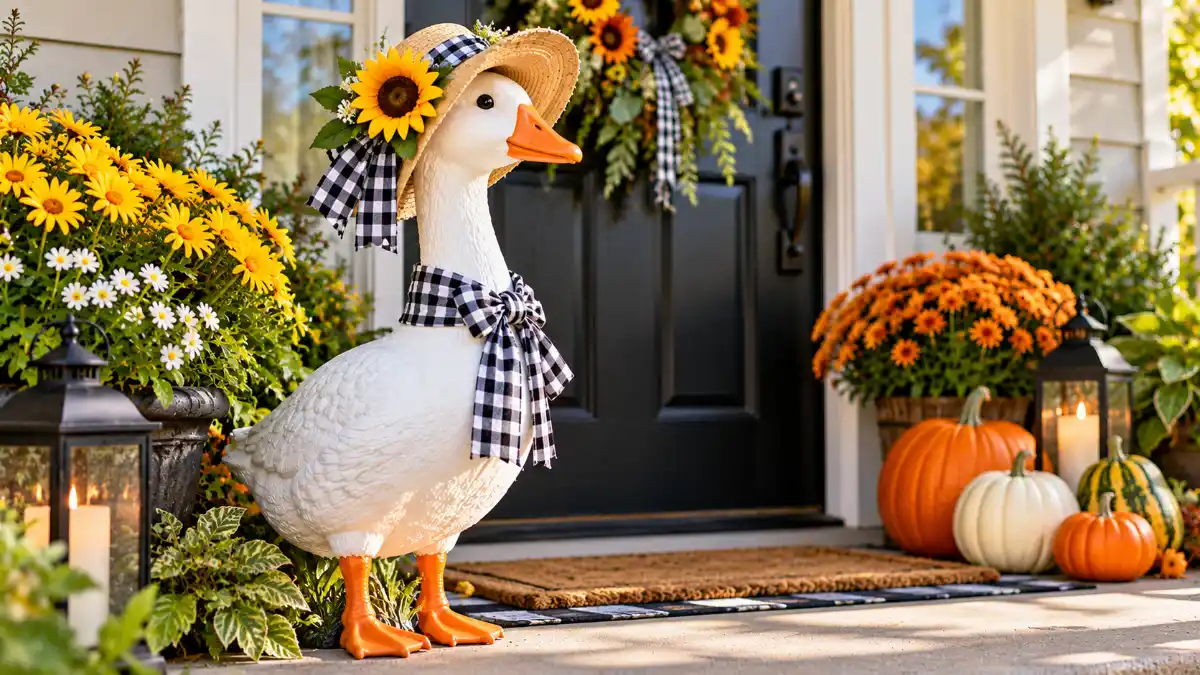
A porch goose is a decorative goose statue you can dress for holidays and changing seasons. Before buying one, check its size, material, and compatibility with the costumes you actually want. A 23-inch plastic goose is a common retail option, but height alone does not guarantee that another brand’s clothing will fit. Concrete has the traditional look and reassuring weight; plastic is easier to move but may need an appropriately weighted base. Most importantly, look closely at the manufacturer’s weather guidance. Some popular statues and outfits are intended for indoor or protected outdoor use, not year-round exposure on an open lawn.
Start With the Space, Not the Costume
Measure the place where the statue will stand. A wide covered porch offers more options than a narrow landing with a swinging door. The goose should never obstruct a step, accessibility route, or walking path.
Then decide what you want from the decoration. If you plan to dress it for every holiday, a model with readily available matching outfits is convenient. If you prefer an understated garden ornament, a heavier concrete statue with an occasional scarf may suit you better.
Concrete or Plastic: What Changes?
A concrete goose tends to stay put because of its weight. It resembles the older statues associated with Midwestern lawns and works well as a semi-permanent feature.
A molded plastic goose is lighter and generally simpler to move for cleaning or costume changes. Depending on its design, that also makes it easier to knock over. Some hollow models are made to hold dry sand as ballast; only use this feature as instructed by the maker.
Do not treat either material as automatically weatherproof. Paint, seams, fabric, and structural condition matter.
The 23-Inch Outfit Trap
One of the most useful details to know is that 23 inches describes the height, not the entire silhouette. Neck length, breast width, wing placement, and base shape differ between models.
Miles Kimball’s Gaggleville goose collection provides a concrete example: it lists a 23-inch large plastic goose and specifies that numerous large outfits are designed for that particular statue. It also sells a smaller 17-inch baby goose, which calls for appropriately sized clothing.
Check the retailer’s measurements and the costume’s product description. If you already own a goose, measure its overall height, widest body circumference, neck, and any protruding wings before ordering.
How to Buy Without Overspending
Start with one statue and one versatile outfit.
Before checkout, confirm whether the listed price includes the goose, the clothing, or both. Some costume photographs feature a dressed statue even when only the outfit is for sale. Also check return policies, shipping costs, and washing instructions.
Secondhand concrete geese can be appealing, but inspect the neck, base, and painted surfaces for damage. Shipping a heavy ornament may also cost more than collecting one locally.
Four Seasons of Porch Goose Outfits
Spring: Light and Cheerful
A gardening apron, floral scarf, or raincoat complements blooming planters. Easter accessories can work for a short period, but a general spring outfit lasts longer. Avoid leaving absorbent fabrics wet against the statue after rain.
Summer: Simple Color
Try a bright bandana, sunhat, or patriotic ribbon for Independence Day.
Fall: The Classic Costume Season
Pumpkin, scarecrow, and plaid looks coordinate naturally with autumn wreaths and planters. Keep dry leaves and fabric away from candles, heaters, and open flames. If your porch gets gusty, skip lightweight accessories that could blow into the street.
Winter: Festive but Practical
A Santa hat or winter scarf gives the goose a holiday look. Many costume fabrics are not intended to remain soaked or frozen. Remove clothing before severe storms and dry everything fully before storing. Where temperatures swing above and below freezing, inspect concrete for cracks.
Make an Easy DIY Goose Outfit
You do not need advanced sewing skills. A scarf is a sensible first project because it can be adjusted without requiring an exact body pattern. Choose fabric suitable for the location, cut a strip long enough to tie comfortably, and trim loose ends so nothing trails underfoot.
For a simple vest, wrap a paper pattern around the bird before cutting fabric. Mark the neck opening, body width, and closure position. Leave enough allowance to slide the outfit on without scraping painted surfaces. Adjustable ties or hook-and-loop closures make changes easier. Avoid exposed pins and wire ends.
If the goose stands where children or pets can reach it, skip tiny bells, buttons, or other easily detached decorations. Decorative accessories should not create a choking or entanglement hazard.
Placement and Weather Safety
Set the statue on a level surface with enough room around it. A protected corner usually gives fabric costumes a longer useful life than an exposed lawn. On elevated ledges, the risk of an ornament falling outweighs the visual effect.
Follow any brand-specific anchoring instructions. Miles Kimball describes a sand-fill opening on its large plastic goose and states that the statue is for indoor or protected outdoor use.
That is not permission to leave every model outside during high winds or storms.
Remove floppy accessories before bad weather. Keep cords, lighting, and other electrical decorations separate unless the equipment is properly rated and safely installed for outdoor conditions.
Keep the Statue and Clothes Clean
For ordinary surface dirt, start with a soft cloth and follow the maker’s cleaning directions. Mild soap and water may be appropriate, but harsh scrubbing can damage finishes. Allow the statue to dry before dressing it again.
Spot-clean or wash costumes according to their labels. Store them fully dry in a box or fabric bag, ideally organized by season.
- Read more: Porch Goose
Frequently Asked Questions
What size porch goose is easiest to dress?
A 23-inch model is widely represented in one major retail costume line. Confirm the brand and measurements, though; height by itself cannot guarantee fit.
Are concrete geese better than plastic ones?
Concrete is heavier and has a traditional appearance. Plastic is easier to lift and reposition. The better choice depends on exposure, available space, and how often you change outfits.
Will every large goose costume fit?
No. A costume may be cut for one manufacturer’s neck and body dimensions. Read the compatibility details before ordering.
Can a plastic goose stay outside in rain?
Only as allowed by that product’s care instructions. For example, Miles Kimball specifies indoor or protected outdoor placement for its large plastic model.
How do I stop it tipping over?
Use a level surface and follow approved ballast or securing instructions. Bring the ornament inside during dangerous weather rather than relying on extra weight alone.
Can I make clothes without sewing?
Yes. Scarves, simple wraps, and ribbons are easy starting points. Make sure they are secure without restricting access or leaving long trailing fabric.
Which seasonal costumes are most versatile?
A few seasonal accessories can cover the year.
How should I clean a painted concrete goose?
Begin gently with a soft cloth. Check for loose paint or cracks and avoid aggressive cleaning products that could damage the finish.
Where should I store goose outfits?
Keep clean, completely dry outfits in a protected container. Separate fragile attachments so they do not snag or crush other costumes.
Do I need to buy expensive accessories?
Not at all. One well-fitting outfit and a few DIY accents can produce a charming display. Focus on safe attachment and durability instead of quantity.