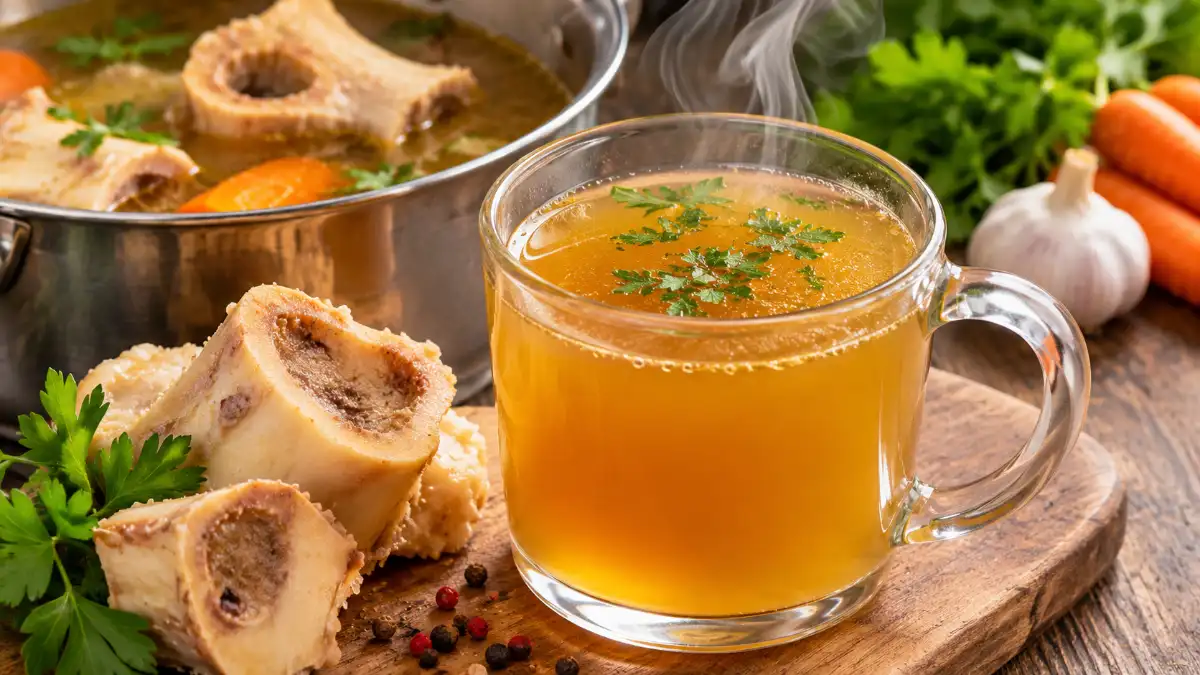
Bone broth is a flavorful liquid that results when animal bones, connective tissues, and sometimes vegetables are cooked slowly in water. It provides fluid and flavor as well as some proteins (gelatin) that come from the breakdown of collagen. Bone broth can be consumed while hot or used as an ingredient in other dishes such as soup, rice, and sauce. While bone broth can be a part of a healthy, balanced diet, the claims regarding its ability to repair the gut, eliminate wrinkles, or relieve joint pain are not supported by the current literature. The nutritional content of the bone broth is determined based on the ingredients used, how long they were cooked, and whether any salt was added.
What Is Bone Broth?
The base for this traditional preparation can be made from chicken, beef, turkey, and fish bones. Typically, the cook will add water, onions, carrots, celery, herbs, and occasionally some vinegar to the mixture of bones. All ingredients are simmered together gently until the resulting liquid is strained of any remaining bones or pieces of bone.
Gelatin is formed when some collagen transforms into gelatin while being cooked. Therefore, a successful extraction can result in a gel-like substance once cooled.
How Is It Different From Regular Stock?
The categories overlap. Stock typically involves the use of bones and requires many hours of cooking. Broth usually contains more meat than stock. Products labeled as bone broth typically feature bones and are cooked for an extended period of time. There is no correlation between the name or length of cooking and a specific amount of nutrients.
Bone Broth Nutrition: What Is in One Cup?
There is not a standard nutrition profile for each individual recipe. Harvard’s nutrition guidelines suggest that most recipes contain approximately 5-10 grams of protein per cup, although there are commercial products available that contain either more or less. In addition to protein content, calorie intake, fat intake, and sodium intake may vary based upon the specific types of bones used in preparation, the amount of meat attached to those bones, the volume of water used to prepare the dish, and the seasonings added during cooking.
The majority of the protein found in broth is primarily made up of collagen-based gelatin. Gelatin has a different amino acid profile than egg, dairy, soy, or meat products. Therefore, you should use broth as a supplementary protein source and not as your sole source of protein. While it may contain calcium, magnesium, and phosphorus, it usually does not provide a sufficient amount of these minerals to substitute for other major dietary sources.
A simple way to verify the information on a label would be to look at the serving size, the amount of protein, the amount of sodium, and the amount of saturated fat. Two products with the same or very similar name may have different nutritional value.
What Are the Real Health Benefits?
Provides Fluids and Convenient Protein
A hot beverage will contribute to your daily fluid intake. It will also satisfy a desire for a non-sweet food. Protein provides the amino acid building blocks for cellular maintenance and tissue repair. However, a small portion of broth is not a nutritionally adequate meal. It does not replace the benefits of consuming vegetables, whole grains, and a variety of protein sources.
May Make Nutritious Meals Easier to Prepare
One of its greatest benefits is as an aid to cooking. An unseasoned broth provides a flavorful liquid for making beans, grains, vegetables, and soups more palatable without adding to the time it takes to prepare them. Start by using an unseasoned broth as the foundation, and then season your food when you sit down to eat.
Collagen Claims Need Perspective
Collagen plays a key role in the structure of our skin, cartilage, and other connective tissues; however, when we consume collagen, we are not consuming intact collagen that will travel directly to our knees or faces. Rather, during digestion, the proteins we eat are broken down into smaller components. As per Harvard’s Collagen Review, the evidence supporting the direct effect of consuming collagen on skin and joints remains limited. While research conducted using concentrated collagen supplements can demonstrate similar benefits to those that might be achieved through making your own homemade collagen broth, this cannot be assumed.
Early research into intestinal inflammation does not support the claim that bone broth can treat leaky gut syndrome, arthritis, or other forms of gastrointestinal disease in humans. Therefore, bone broth should be consumed as food, and not as a replacement for medical treatment.
How to Make Bone Broth at Home
This is an easy stovetop method that can be used with both chicken and beef bones. The resulting broth is a great beginning to many different recipes.
Ingredients
2 to 3 pounds of chicken or beef bones, including joints when available
1 onion, 2 carrots, and 2 celery stalks, roughly chopped
2 bay leaves and a few sprigs of thyme or parsley
Approximately 12 cups of water, enough to cover the ingredients
1 tablespoon of vinegar, optional
Pepper and a modest amount of salt, added near the end
Cooking Instructions
The bones and vegetables are to be placed into a clean stockpot that is large enough to hold all ingredients. If you would like your stock to have a richer, more brown color, roast the beef bones before placing them into the stockpot.
Add the herbs, optional vinegar, and water. Heat the contents of the pot until it begins to bubble, then reduce the heat so that the mixture continues to cook slowly.
Cook with a lid on the pot (covered) or with a partially covered pot, adding water as necessary, for about 8-12 hours. If you’re cooking with a slow cooker, follow the manufacturer’s directions.
Strain through a very small mesh screen. Get rid of the bones and any of the food you have cooked. Do not ever give someone something to eat with sharp pieces in it.
Divide the liquid into shallow containers and quickly cool down. Remove the top layer of solid fat once it has cooled down, if you wish to.
Do not leave a boiling pot of water unattended for an entire day (or night). If you are looking to make something that takes less time than that, then a pressure cooker may be able to give you a great-tasting stock if you use it correctly as stated in its user manual.
How to Use It in Everyday Meals
You may use a small cup of pepper, ginger, or lemon, or you can substitute some of the water you would use to make rice. You can also use this in lentil soup, vegetable stew, noodles, and sauces. This can be used as the liquid for a lightly spiced chicken shorba in India; while in America, this is typically used for chicken soup and savory grain bowls.
If you want to create a larger meal, consider adding some cooked chicken or tofu along with vegetables and noodles. Creating a meal in this way is important,t as most broths do not provide enough fiber, energy, or nutrient variety for a complete meal.
Choosing Store-Bought Broth and Avoiding Risks
Select products using nutritional facts and ingredients rather than marketing claims (e.g., “detoxifying” or “anti-aging”). Select products with few, simple ingredients, adequate protein per serving, and a sodium content that meets your dietary requirements. Products labeled “low sodium” or “no salt added” will provide more flexibility when it comes to controlling the amount of seasoning you use.
Individuals with kidney disease and/or sodium restrictions need to speak to their healthcare provider regarding appropriate portion sizes. Individuals who have food allergies should take extra care in reviewing the ingredients used in each meal, particularly if there are any products containing fish, shellfish, and/or multiple types of meat.
Food preparation also requires similar care. As per USDA guidelines, you should refrigerate leftover food within two hours after preparation, and if the temperature is above 90 degrees Fahrenheit, within one hour. Your refrigerator should be kept at 40 degrees Fahrenheit or lower, and you can consume refrigerated broth for up to three to four days, and then freeze any remaining portion to be used at another time. It is recommended to cool large amounts of food in small, shallow containers instead of leaving a large hot pot on the counter.
- Read more: Bone Broth
Frequently Asked Questions
Can I Drink Bone Broth Every Day?
Many healthy adults can enjoy a cup regularly as part of a varied diet. There is no established requirement to drink it daily. Check sodium and overall protein intake, and seek individualized advice if you have a condition requiring dietary restrictions.
Is Chicken or Beef Broth Better?
Neither is universally better. Chicken usually offers a lighter flavor, while beef often tastes richer. Nutrition varies more by recipe, concentration, and brand than by the animal alone. Choose the flavor and ingredient profile that fits your cooking.
Does It Help With Weight Loss?
It can replace a higher-calorie snack or add flavor to filling meals, but it does not independently burn fat. Sustainable weight management depends on overall eating patterns, activity, sleep, and other personal factors. Avoid replacing balanced meals with broth alone.
Why Does Homemade Broth Turn Into Jelly?
Gelatin forms as collagen-rich connective tissue cooks and then cools. A batch that stays liquid is not necessarily unsafe or worthless; the amount of gelatin varies with ingredients and dilution.
Can I Freeze Homemade Broth?
Yes. Freeze cooled portions in freezer-safe containers, leaving room for expansion. Label each portion with the date. For best quality, use frozen homemade broth within about two to three months, and reheat thoroughly before serving.