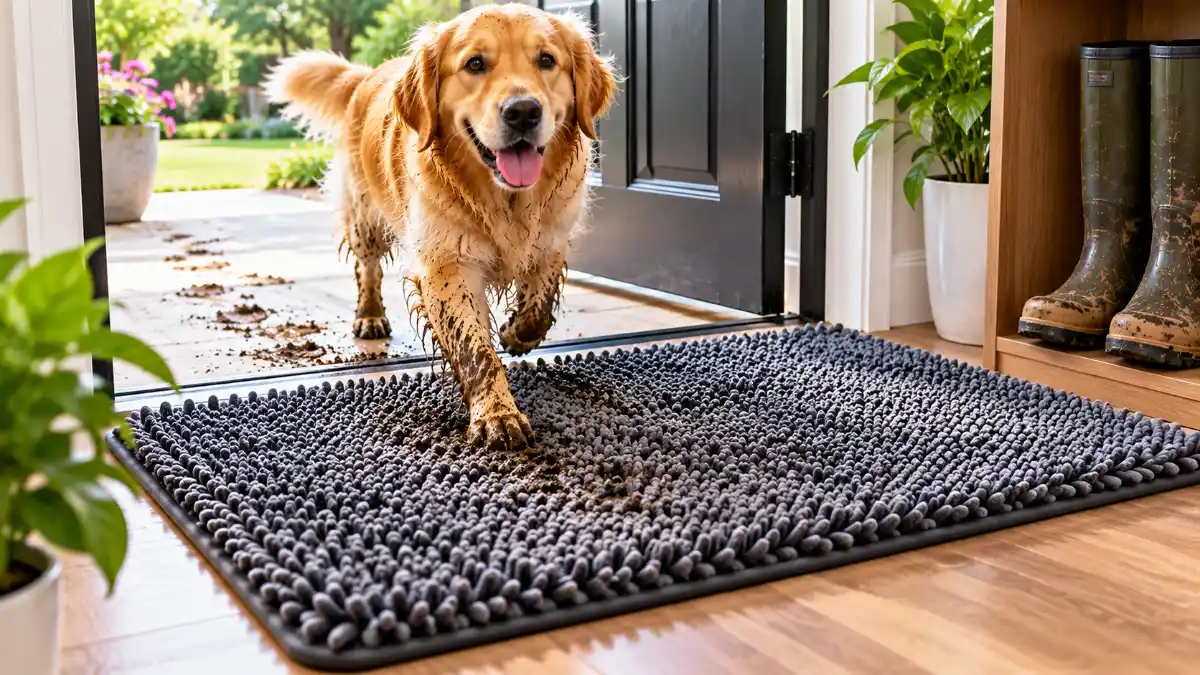
A muddy mat works best when you place it directly inside the entrance your dog uses and give your pet enough room to walk several steps across its absorbent surface. Muddy Mat’s chenille microfiber is designed to collect moisture and loose dirt before paws reach clean flooring. However, simply leaving it beside a doorway won’t prevent every muddy footprint. The mat needs proper placement, regular cleaning, and occasional help from a towel when your dog comes home particularly dirty. These seven practical steps explain how to use Muddy Mat effectively, keep it clean, and avoid common mistakes that reduce its usefulness.
1. Position Your Muddy Mat Along Your Dog’s Walking Route
Watch where your dog goes after coming inside.
Some dogs stop by the door while their owners remove a leash. Others hurry toward a favorite sleeping spot or the kitchen.
Place the mat where those first steps naturally occur.
A beautifully positioned rug won’t accomplish much if your dog routinely walks around it.
Ideally, the mat should provide several paw contacts before your dog reaches unprotected flooring.
If space allows, position a runner lengthwise along the entry route.
Check that the mat doesn’t block door movement or create a tripping hazard.
What If the Door Catches the Mat?
Move it beyond the door’s swing.
The manufacturer’s FAQ describes the standard Muddy Mat as approximately 0.3 inches high. Other product listings may describe thicker versions, so checking the exact dimensions is sensible.
Open the door slowly through its full movement before deciding on a permanent position.
2. Choose a Size That Provides Enough Paw Contact
Your dog’s stride matters more than its weight alone.
A small mat may provide several steps for a Chihuahua but only one step for a Labrador.
The manufacturer’s product range includes compact mats and longer runners.
Commonly advertised dimensions include:
| Approximate Size | Useful Placement |
| 18 × 28 inches | Small entrance |
| 19 × 30 inches | Narrow doorway |
| 24 × 35 inches | Family entryway |
| 24 × 60 inches | Longer walkway |
| 35 × 60 inches | Mudroom or multiple dogs |
Confirm the dimensions of your chosen product because availability and measurements can vary between listings.
For several dogs entering together, prioritize a clear walking area rather than simply buying the thickest-looking option.
A runner may be more effective than a compact mat because it gives paws additional contact with the textured surface.
3. Teach Your Dog to Stop on the Mat
Dogs don’t automatically understand that an entryway mat is supposed to catch dirt.
A consistent routine can make the setup more useful.
After a walk, guide your dog onto the mat and ask for a familiar cue such as “wait.”
Reward the dog for remaining calm while you remove its leash or check its paws.
If your dog is comfortable, encourage a few small steps across the surface.
Keep the process relaxed rather than turning every trip inside into a difficult training exercise.
When Your Dog Is Particularly Muddy
Use a clean towel to wipe mud from the paws before the dog moves farther into the house.
Pay attention to dirt between the paw pads and around the claws.
A mat can collect loose debris, but it cannot reliably remove compacted mud from those spaces.
A quick rinse may be necessary when mud is heavy.
4. Use Different Cleaning Methods for Different Messes
Not every outdoor mess requires the same approach.
Wet grass often leaves moisture without much visible dirt. A microfiber mat may handle much of that water.
Dry soil is different. Loose particles may fall into the chenille fibers, but some can remain attached to paws.
Sticky mud creates the biggest challenge because it can cling between pads and around nails.
A practical entryway setup separates those tasks.
Use a coarse scraper outside for muddy footwear. Let your dog walk across the absorbent mat indoors, and wipe its paws when needed.
During winter, remember that road salt and deicing products may need to be rinsed from paws rather than merely wiped onto a rug.
Check paws for irritation after walks through treated areas.
5. Remove Loose Debris Before Washing
Muddy Mat is machine washable, but that doesn’t mean it should go directly into the washer covered in grit.
Start by taking it outside and shaking off loose dirt.
If the surface contains dry mud, gently loosen the debris before cleaning.
A vacuum may help collect dog hair and dust, provided the attachment is suitable for textured fabric.
Avoid vacuum settings that aggressively pull or snag chenille strands.
This preparation reduces the amount of soil entering the washing machine.
When Is Machine Washing Necessary?
Look at the mat rather than following a rigid calendar.
Wash it when dirt remains after shaking, odors develop, or the fibers become heavily loaded with debris.
A household with several active dogs may need more frequent laundering than a home with one small dog.
Rainy weather also increases moisture exposure, making regular inspections worthwhile.
6. Follow the Official Muddy Mat Washing Instructions
The manufacturer’s cleaning guide recommends washing Muddy Mat products individually in cool water with regular detergent.
Avoid bleach and fabric softener.
These instructions are intended to protect the mat’s fibers and backing during repeated cleaning.
Before washing a large mat, check the capacity of your machine.
Heavy, waterlogged items can create an unbalanced load during the spin cycle.
If your washer struggles, follow its operating instructions rather than forcing the cycle to continue.
For particularly large products, consider whether a suitably sized washing machine is available.
Do not assume every mat will fit comfortably into a compact household washer.
7. Let the Mat Dry Completely Before Reusing It
Cleaning isn’t finished when the washing machine stops.
According to the official Muddy Mat FAQ, the product can be air-dried or tumble-dried on low heat.
The company advises against high drying temperatures.
If air drying, choose an area with good ventilation and enough space for the mat to dry thoroughly.
Check the backing before putting it on the floor.
Even when the chenille feels dry on top, moisture may remain underneath.
Placing a damp mat against finished flooring can leave unwanted moisture trapped beneath it.
For busy households, keeping a second mat available can be convenient while the first one dries.
How to Protect Floors Beneath a Muddy Mat
An absorbent rug can help reduce water and loose dirt reaching the surrounding floor, but it isn’t guaranteed protection against every spill.
Lift it periodically to inspect the underside.
Remove accumulated grit, particularly if the mat sits on hardwood or another finished surface.
Keep the area beneath it dry.
Muddy Mat uses slip-resistant backing, but different flooring materials may have specific restrictions regarding rubber or thermoplastic rug backings.
Check your flooring manufacturer’s care recommendations before leaving any backed rug in place for extended periods.
If the mat starts sliding or bunching, reposition it immediately.
Common Mistakes That Reduce Muddy Mat’s Effectiveness
Most problems come from placement, expectations, or neglected cleaning.
A mat that’s too short may only catch one footprint.
A mat positioned beside the dog’s usual route may barely get used.
A heavily saturated mat has less capacity to collect additional water.
Expecting chenille to clean thick mud between paw pads can also lead to disappointment.
Finally, washing with unsuitable products or returning the mat while damp can interfere with proper maintenance.
These issues usually have straightforward solutions: better coverage, a consistent entrance routine, and appropriate care.
Final Thoughts
Getting better results from Muddy Mat doesn’t require an elaborate cleaning system.
Place it where your dog naturally enters, allow several steps across the surface, and remove heavy mud separately.
Shake out loose debris, follow the manufacturer’s washing instructions, and return the mat only when completely dry.
Used consistently, these habits can help keep everyday wet paw prints and loose dirt from spreading farther through the house.
- Read more: Muddy Mat
Frequently Asked Questions
Where should I place Muddy Mat for the best results?
Place it directly inside your dog’s usual entrance, preferably where the dog can take several steps across it before reaching uncovered flooring.
How do I wash a Muddy Mat without damaging it?
Wash it individually in cool water using regular detergent. Avoid bleach and fabric softener, and follow the manufacturer’s instructions for your product.
Can Muddy Mat go in the dryer?
Yes. The manufacturer recommends tumble drying on low heat or air drying. Avoid high temperatures, and ensure the backing dries completely.
How often should I clean my Muddy Mat?
That depends on use. Wash it when visible dirt, odors, or accumulated debris make cleaning necessary rather than relying on a fixed schedule.
Why does my dog still leave muddy footprints?
The mat may be too short, improperly positioned, or already damp. Mud trapped between paw pads can also require wiping or rinsing.
Can I vacuum a muddy mat?
You can remove loose debris with a suitable vacuum attachment. Avoid aggressive settings that pull at the chenille fibers.
Is Muddy Mat suitable for hardwood flooring?
It can be used where the flooring manufacturer permits the backing material. Keep the floor beneath it clean and dry, and inspect it regularly.
Should I leave Muddy Mat outside during rain?
Check the specific mat’s intended use. For constantly exposed entrances, a dedicated weather-resistant outdoor mat may be preferable.
How can I clean my dog’s paws after a muddy walk?
Remove thick mud with a towel or appropriate rinse, then let your dog walk across the mat to collect remaining moisture and loose debris.